

Beneath a whisper of golden light and the resolute hush of a deep red wall, the listening corner draws you in—not with spectacle, but with quiet assurance. There’s a meditative gravity to the way each object settles into place, as if time itself decided to pause and take up residence here. The brass-rimmed clock holds court like an heirloom guardian, its hands frozen at ten past ten—a moment that resists urgency. A vinyl record spins slowly on warm circuitry, its yellow label catching just enough light to turn curiosity into intent. The sleeves arranged below form a silent archive, their edges now sharper, more insistent, as if ready to tell you what mattered and what didn’t. It’s not just a corner; it’s a threshold between memory and sound, where the room listens back.
This series continues in that spirit. It favors spaces not defined by wattage or wiring diagrams, but by resonance—by how things feel when light lands on wood, or when you hear the brief catch of stylus on groove. We explore not just the gear, but the gestalt: where texture meets time, and fidelity refuses to be just digital. Every detail here is deliberate—curated as much for mood as function. The weight of the record sleeve, the softened bevels of brass, the glow that never shows its source—all conspire toward an experience that’s visceral, persuasive, and quietly complete. This isn’t about filling shelves. It’s about shaping atmosphere, and treating every sonic tool as part of a larger story that knows how to breathe.
The Draw of Nostalgia, Even When Time Isn’t Personal
Nostalgia isn’t merely a longing for the past—it’s a way of creating emotional continuity in a world that often feels too fast to hold onto. The textured silence of old materials, the weight of wood, and the imperfect warmth of analog sound offer a counterpoint to smooth screens and cloud storage. These elements evoke something deeper than memory: they conjure stillness. To surround oneself with pieces that mark time slowly—a ticking wall clock, a record player mid-spin—is to resist erosion, even briefly, and reclaim presence in a world allergic to pauses.
What’s remarkable is how nostalgia has come to influence those who have never lived through the eras they romanticize. There’s a new generation building sanctuaries filled with sepia-toned references—turntables, film cameras, mechanical keyboards—not because they remember, but because they feel. The artifacts become emotional proxies, chosen not for history, but for atmosphere. These young curators aren’t mimicking the past; they’re selecting elements that help them imagine it. Their spaces don’t recreate a specific decade—they evoke timelessness, a place where quiet rituals replace constant notifications.
In a way, nostalgia has become a form of aesthetic protest. It’s less about remembering, more about recovering something that feels emotionally sincere. Young people don’t need firsthand experience with analog clocks or vinyl to understand their quiet appeal. They build rooms where the lights fall softly, where time is measured in moments rather than minutes. Their pursuit isn’t backward—it’s inward. Through these objects, they craft worlds that breathe, that hold emotion without explanation, and that remind them that not everything must be instant to be meaningful.
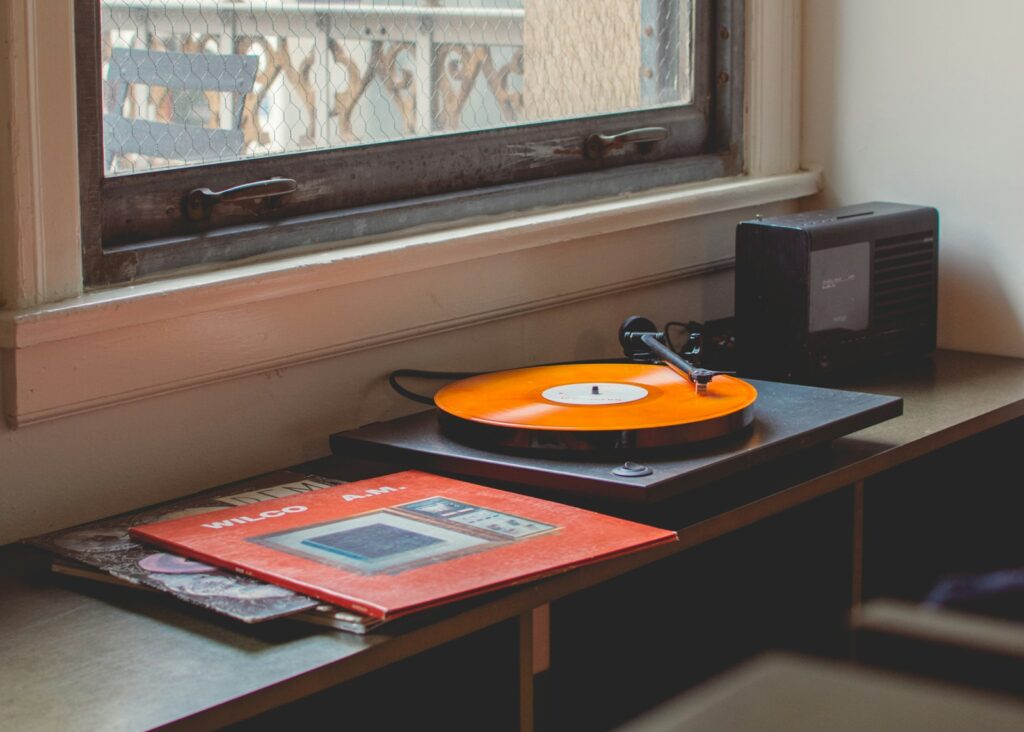
Turntables
The turntables for vinyl records
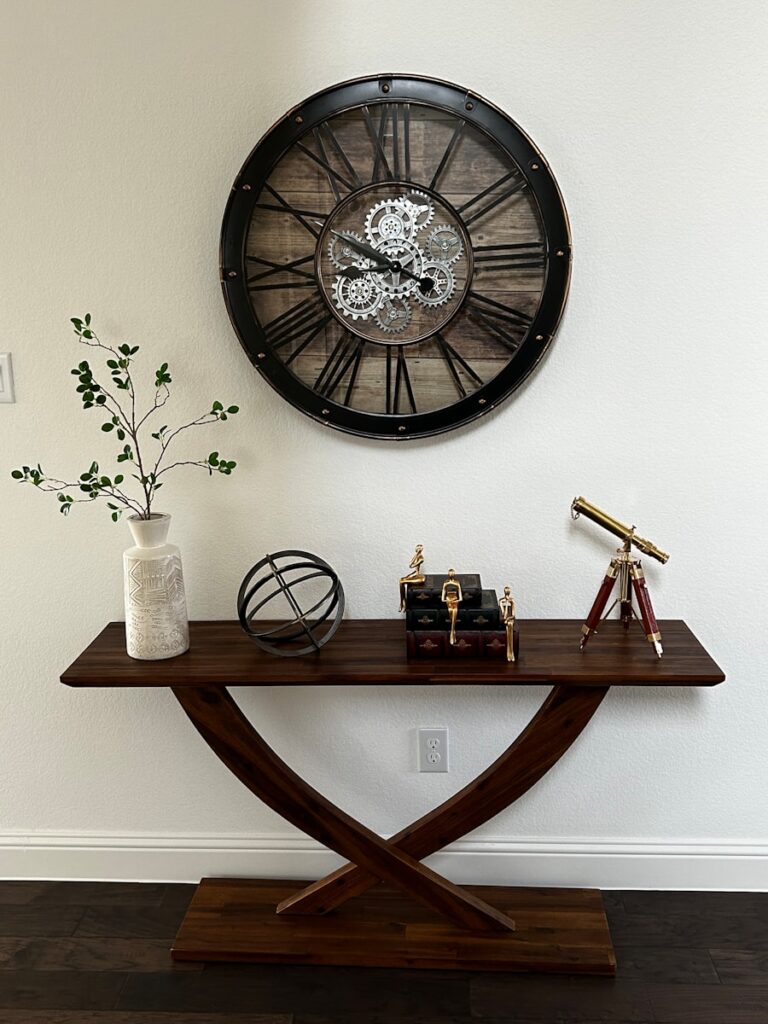
Wall clocks
Time pieces that decorate the walls
From Invention to Intimacy: The Journey of Wall Clocks and Turntables
Wall clocks and turntables began as marvels of mechanical ingenuity, born from a desire to measure and preserve time and sound. The earliest wall clocks trace their lineage to sundials and water clocks used in ancient Egypt and Greece, evolving into mechanical timepieces in medieval Europe with the invention of the verge escapement around 1300. By the 17th century, pendulum clocks—thanks to Christiaan Huygens 1—ushered in a new era of precision, eventually finding their way into homes as ornate grandfather clocks and later, compact wall-mounted versions. Turntables, meanwhile, emerged from Thomas Edison’s phonograph 2 in 1877 and Emile Berliner’s gramophone 3 in 1887, which replaced cylinders with flat discs. As electricity became widespread, record players became household staples, with stereo sound and belt-drive systems in the mid-20th century transforming them into both entertainment hubs and design statements.
Beyond their function, wall clocks and turntables became expressive objects—art pieces that reflect the temperament and taste of their owners. A minimalist clock with clean lines might suggest a love for order and restraint, while a baroque timepiece with gilded flourishes might hint at nostalgia or romanticism. Turntables, too, speak volumes: a sleek, modern deck might signal a precision-minded audiophile, while a vintage wooden console could evoke warmth, ritual, and reverence for analog imperfection. These items are not just tools—they’re declarations. They sit in rooms like punctuation marks, shaping the rhythm of a space and offering guests a glimpse into the owner’s aesthetic and emotional world.
And perhaps most poignantly, both wall clocks and turntables mark personal evolution. A clock might be the first object hung in a new home, a quiet witness to growth, grief, and celebration. A turntable might be the gateway to musical discovery, or the anchor for a ritual that brings calm after chaos. As people refine their tastes, these objects often change too—replaced, upgraded, or repurposed—not because they’ve lost value, but because the person has shifted. In this way, they become more than possessions; they’re companions in time and sound, evolving alongside the individual, quietly chronicling the story of becoming.
The Tangible Past in a Digital Present
It’s a rare and wondrous moment we live in—where it’s possible to assemble a personal museum of memory with wall clocks, turntables, and analog artifacts, even as the world races ahead with AI, quantum computing, and virtual realities. The quiet hum of a stylus meeting vinyl exists in parallel with cloud-synced playlists and immersive sonic landscapes. We are the first generation with access to both: the texture of the past and the acceleration of the future, coexisting in the same room.
That duality invites a kind of reverent playfulness. One can design a space that holds emotion through design, while simultaneously embracing tools that extend imagination far beyond physical constraints. Nostalgia no longer competes with innovation—it complements it, reminding us that even in a digitized age, what we collect says less about what’s useful and more about what feels. We live between eras, and what a gift that is.
Footnotes
- Christiaan Huygens wasn’t just the inventor of the pendulum clock—he also discovered Titan, Saturn’s largest moon, in 1655 using a telescope he ground himself. He later explained the planet’s mysterious “ears” as rings, correctly identifying their shape long before modern astronomy confirmed it.
- Thomas Edison’s original phonograph from 1877 used a cylinder wrapped in tinfoil to record sound—so delicate that recordings could only be played a few times before wearing out. The first phrase it ever spoke? “Mary had a little lamb,” recited by Edison himself.
- Emile Berliner’s gramophone, patented in 1887, was the first device to use flat discs instead of cylinders—making mass production of music possible for the first time. One of the earliest recordings? A voice reciting lines from Shakespeare’s Hamlet, preserved in a groove etched into glass.