

Road To Hell
Chris Rea’s The Road to Hell is a cinematic blues-rock journey through modern disillusionment and spiritual fatigue. Featuring tracks like “The Road to Hell (Part II),” “Texas,” and “Tell Me There’s a Heaven,” this LP blends atmospheric textures with lyrical urgency—philosophical, haunting, and unforgettable.
🌌 Chris Rea – The Road to Hell (WEA Records, 1989 – Vinyl Edition)
Some albums cruise. The Road to Hell confronts. This landmark LP from Chris Rea is a moody, philosophical journey through the undercurrents of modern life—blending blues-rock grit with ambient textures and existential commentary. It’s not just a record—it’s a warning, pressed in vinyl and wrapped in surreal symbolism.
The album opens with “The Road to Hell (Part I)”, a slow-building instrumental that sets the tone with ambient synths and atmospheric guitar. It’s cinematic and foreboding, like headlights cutting through fog.
“The Road to Hell (Part II)” follows with lyrical bite. Rea’s gravelly voice delivers a scathing critique of consumerism, traffic, and spiritual emptiness. The groove is hypnotic, the arrangement lean and haunting.
“You Must Be Evil” and “Texas” explore moral ambiguity and escapism. The former is sardonic and sharp, the latter warm and wistful—offering a sonic contrast that deepens the album’s emotional arc.
“Looking for a Rainbow” is expansive and melancholic. Clocking in at over eight minutes, it’s a slow-burning meditation on hope and disillusionment.
Side B shifts toward intimacy and reflection:
• “Your Warm and Tender Love” is romantic and spacious
• “Daytona” evokes motion and longing, with rich guitar textures
• “That’s What They Always Say” and “I Just Wanna Be With You” offer lyrical vulnerability
• “Tell Me There’s a Heaven” closes the album with emotional gravity—a plea for innocence and justice, framed by orchestral restraint
The production, led by Jon Kelly and Rea himself, is layered and intentional. Studio monitors will reveal the full fingerprint—Rea’s slide guitar voicings, Max Middleton’s string arrangements, and the ensemble’s dynamic nuance.
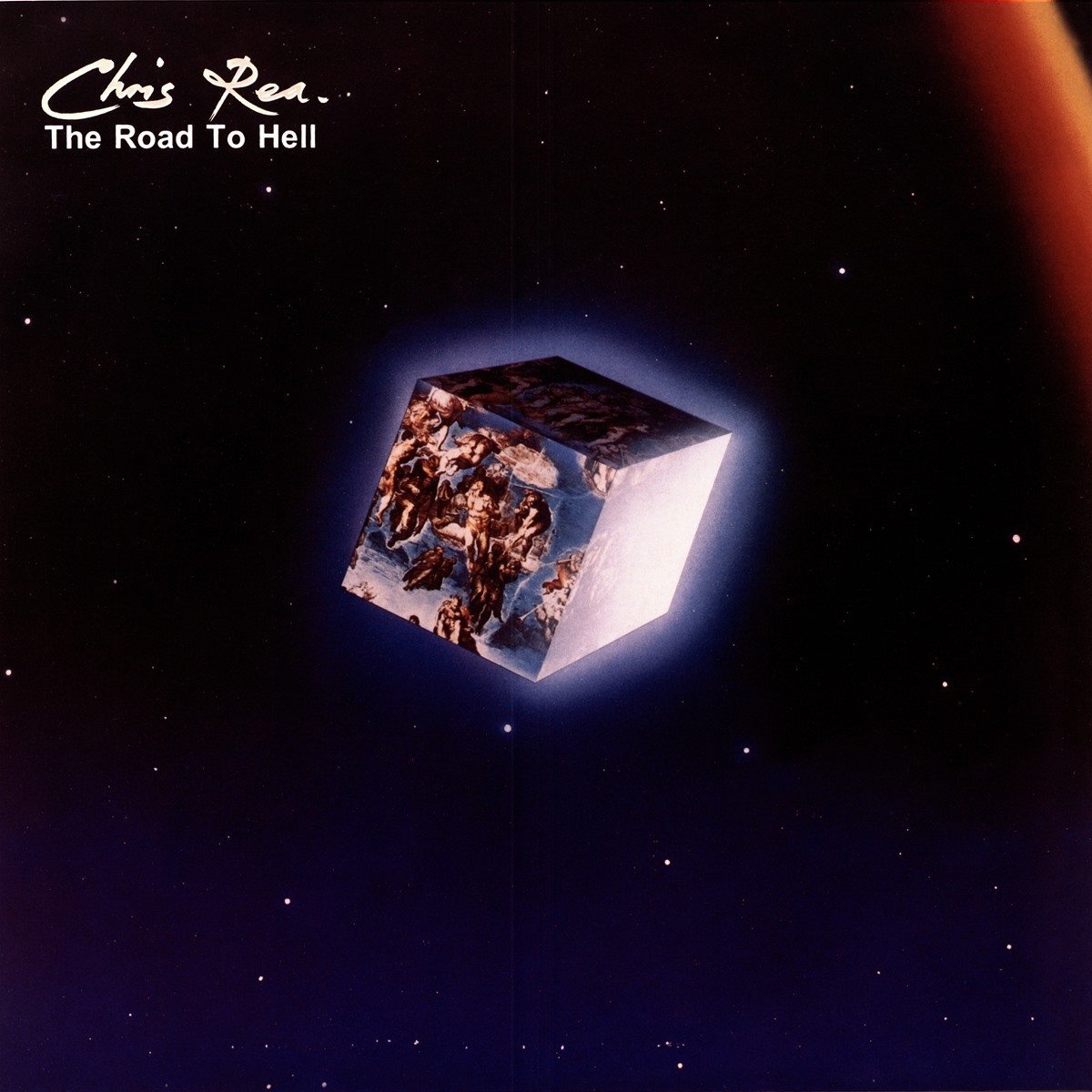
Visually, the album cover is surreal and symbolic. A glowing cube floats in space, covered in chaotic human imagery. It’s a metaphor for digital overload, societal fragmentation, and existential drift. The design by The Leisure Process is bold, enigmatic, and unforgettable.
The Road to Hell is not just an album—it’s a curated emotional and philosophical arc. It honors the ensemble, the metaphor, and the listener’s capacity for reflection. It’s music that listens as deeply as it speaks.
Whether you’re discovering Chris Rea for the first time or returning to this chapter with new ears, this LP offers a listening experience that’s both grounded and transcendent. It’s not just a release—it’s a reckoning, pressed in vinyl and waiting to be heard.
Related Products


The Stranger 30th Anniversary Legacy Edition

Grace


Van Halen – 1984 Remastered


Purple Rain 2017

AM


Traveller
