











































































































































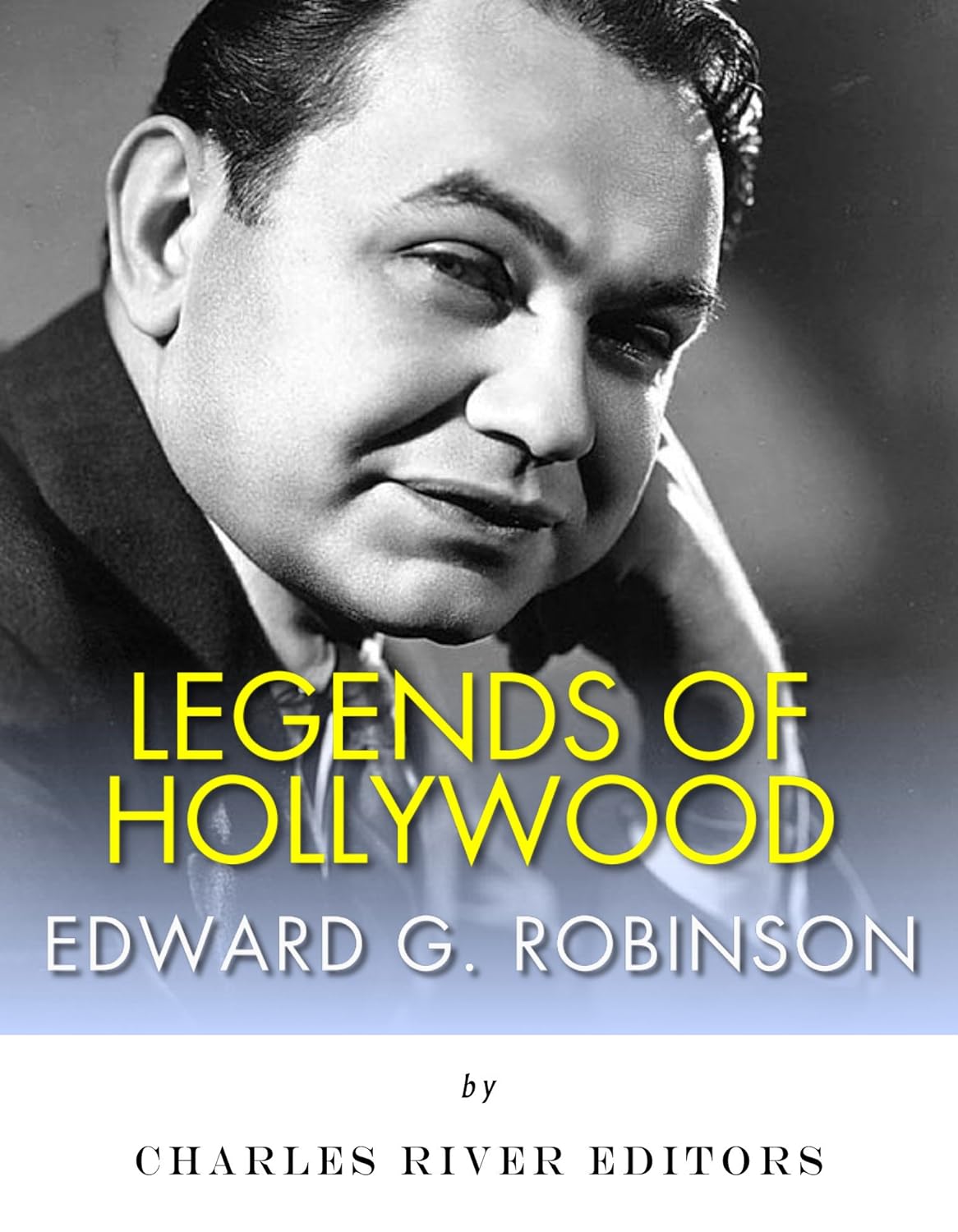
Legends of Hollywood: The Life and Legacy of Edward G. Robinson
Discover the captivating life and enduring legacy of Edward G. Robinson in Legends of Hollywood. This meticulously researched book offers an in-depth look at the iconic actor’s career, influence, and personal story, making it a must-read for film enthusiasts and history lovers alike.
*Includes a bibliography for further reading
*Includes a table of contents
“I know I’m not much on face value, but when it comes to stage value, I’ll deliver for you.” – Edward G. Robinson
For most enthusiasts of film history, Edward G. Robinson’s name is virtually synonymous with the Depression-era gangster films of the 1930s. After all, Robinson starred in Little Caesar (1931), which was one of the first major gangster films and is perhaps the most representative example of the genre. Little Caesar remains his most iconic gangster role, but he acted in several other notable gangster films over the course of the decade, including The Little Giant (1933) and A Slight Case of Murder (1938). Even during the 1940s, after the gangster genre had ceded much of its standing to the postwar film noir genre, Robinson retained his ties to gangster films, memorably playing gangster Johnny Rocco in Key Largo (1948). With his short, round physique and irascible screen persona, Robinson became a kind of cinematic brother to James Cagney, and the two remain the most famous of the Hollywood gangster stars.
As much as Robinson’s fame remains attached to the rise of the gangster films of the 1930s, it also is important to recognize that he was successful in progressing into the postwar noir films—a genre that bears important similarities with the gangster genre but reworks it in significant ways. Indeed, Robinson starred in what may have been the most famous gangster picture – he played a memorable role in Double Indemnity (1944), which may well be the most famous noir movie ever made. Edward established his status as a worthy noir actor by starring in a duo of underrated Fritz Lang films—The Woman in the Window (1944) and Scarlet Street (1945)—as well as the Orson Welles movie The Stranger (1946). As his memorable noir performances demonstrate, Edward G. Robinson was more than just a famous gangster villain. He represents someone who was able to successfully navigate the changes in Hollywood cinema from the 1930s through the following decade.
Interestingly, even as Robinson became a star on the screen, events off screen also made him abdicate his lofty standing. A first-generation immigrant who moved to the United States from Romania while still a child, Robinson’s rise in the entertainment industry—first on stage and then in Hollywood—embodied the Horatio Alger myth of a self-made man. Lacking the conventional attractiveness that characterized most male actors (particularly leading men), it was through his sheer skill and virtuosity that Robinson was able to fashion a successful career. However, if Robinson benefitted early in his career from the opportunities presented by Hollywood, it was also at the hands of the industry that his career was compromised during the early 1950s through the efforts of the House Un-American Activities Committee (HUAC). Although he was not a member of the Hollywood Ten, Robinson was a suspected Communist, and his name was tarnished within the acting community and in the eyes of the American public. He would continue to act through the end of his life, but his days as a major figure in Hollywood were brought to an abrupt end.
Legends of Hollywood: The Life and Legacy of Edward G. Robinson analyzes Robinson’s career in the 1930s and 1940s, as well as his real life roles as Hollywood star and victim.. Along with pictures and a bibliography, you will learn about Edward G. Robinson like never before, in no time at all.
Read more
Legends of Hollywood: The Life and Legacy of Edward G. Robinson offers an insightful exploration into the remarkable career and enduring influence of one of cinema’s most iconic figures. This meticulously crafted biography, published independently, delves deep into the life of Edward G. Robinson, revealing the complexities behind his commanding screen presence and his significant contributions to Hollywood’s golden era. Through engaging narrative and thorough research, readers gain a nuanced understanding of Robinson’s journey from humble beginnings to becoming a legendary actor known for his distinctive roles in classic films. This book serves not only as a tribute to Robinson’s talent but also as a valuable resource for film enthusiasts, historians, and anyone interested in the evolution of American cinema. It enriches everyday reading by offering a captivating blend of personal anecdotes, historical context, and critical analysis that brings the glamour and grit of old Hollywood vividly to life. Whether used for casual reading or academic reference, Legends of Hollywood enhances the user experience by providing a comprehensive portrait of a man whose legacy continues to shape the film industry. Crafted with care and passion by an independent publisher, this work stands out for its dedication to authenticity and depth. It invites readers to reflect on the artistry and cultural impact of Edward G. Robinson, making it a timeless addition to any collection focused on film history and legendary figures. Perfect for those seeking to deepen their appreciation of Hollywood’s heritage, this book offers an enriching journey through the life of one of its most enduring stars.
| Attributes | Value |
|---|---|
| Publisher | Independently Published |
Related Products

Chanel: The Complete Collections (Catwalk)


The 48 Laws of Power

Be Ready When the Luck Happens: A Memoir

The Complete Cookbook for Young Chefs: 100+ Recipes that You’ll Love to Cook and Eat

The Demon of Unrest: A Saga of Hubris, Heartbreak, and Heroism at the Dawn of the Civil War

The Louvre: All the Paintings

All the Beauty in the World: The Metropolitan Museum of Art and Me

Luna Luna: The Art Amusement Park

Cher: Part One: The Memoir: Part One of a Two-Part Memoir from the Iconic Artist and Actor (The Cher Memoir, 1)

